
The world’s population is exploding, and with it, the demand for food. Traditional farming methods are struggling to keep up, and the agricultural industry is facing a labor shortage. Enter agrobots, the robots revolutionizing how we grow and harvest food.
Agrobots are autonomous or semi-autonomous robots designed to perform agricultural tasks, from planting and weeding to harvesting and sorting crops. These robots are equipped with advanced sensors, GPS technology, and artificial intelligence, allowing them to navigate fields, identify crops, and make decisions in real time.
Types of Agrobots and Their Applications
There are various types of agrobots, each designed for specific tasks:
- Planting robots: These robots automate the planting process, ensuring precise seed spacing and depth for optimal growth.
- Weeding robots: Equipped with cameras and AI, weeding robots can identify and remove weeds without damaging crops, reducing the need for herbicides.
- Harvesting robots: These robots can identify ripe produce, gently pick it, and sort it for packaging, increasing efficiency and reducing waste.
- Spraying robots: These robots can precisely apply fertilizers and pesticides, minimizing chemical use and environmental impact.
- Drone robots: Drones equipped with cameras and sensors can monitor crop health, identify pests and diseases, and create detailed maps of fields.
Reviews of Agrobots in Action
Farmers and agricultural businesses worldwide are adopting agrobots with promising results:
- Iron Ox: This company uses robotic arms and hydroponic systems to grow produce indoors, increasing yields and reducing water usage.
- Abundant Robotics: Their apple-picking robots use vacuum technology to gently harvest fruit, addressing labor shortages in orchards.
- FarmWise: Their automated weeding robots use machine learning to identify and remove weeds with high accuracy, reducing herbicide use.
- Blue River Technology: Acquired by John Deere, their See & Spray technology uses computer vision to target weeds with herbicides, minimizing chemical use.
Pros and Cons of Agrobots
Pros:
- Increased efficiency and productivity: Agrobots can work 24/7, covering large areas and performing tasks faster and more accurately than humans.
- Reduced labor costs: Agrobots can address labor shortages and reduce reliance on manual labor, especially for repetitive tasks.
- Improved crop yields and quality: Precise planting, weeding, and harvesting can lead to higher yields and better-quality produce.
- Reduced environmental impact: Agrobots can minimize chemical use, water consumption, and soil erosion.
- Enhanced safety: Agrobots can perform tasks in hazardous environments, reducing risks for human workers.
Cons:
- High initial investment: Agrobots can be expensive to purchase and implement, potentially limiting adoption for smaller farms.
- Technical expertise required: Operating and maintaining agrobots requires specialized skills and training.
- Potential job displacement: The automation of tasks may lead to job losses in some areas.
- Ethical concerns: Issues surrounding data privacy, algorithmic bias, and the impact on rural communities need to be addressed.
Related: 7 Easy Steps for Eco-Friendly Lawn Care
The Future of Agrobots and Farming
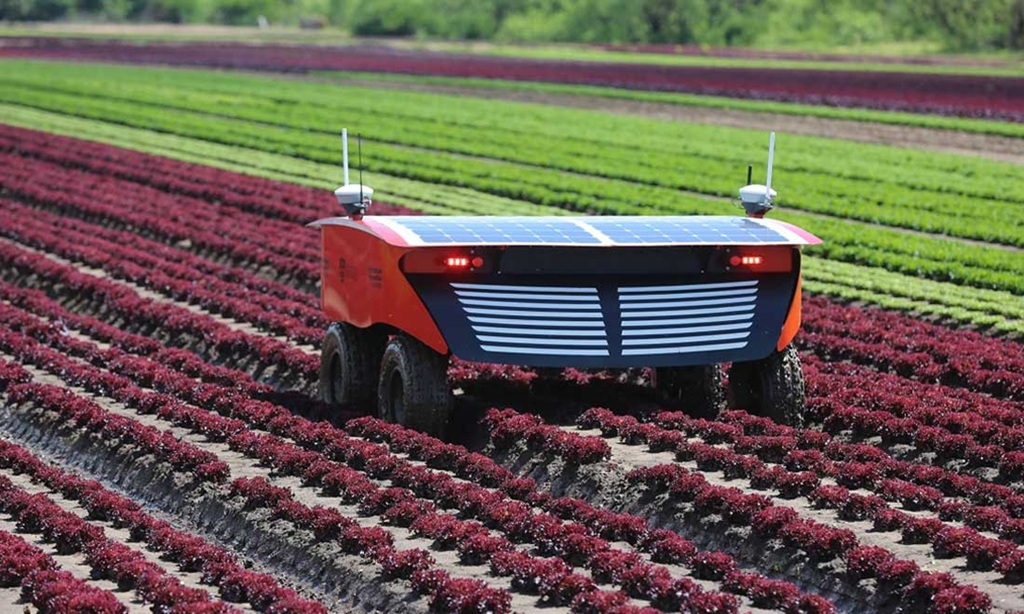
Agrobots are still a relatively new technology, but their potential is vast. As artificial intelligence and robotics continue to advance, we can expect to see even more sophisticated agrobots capable of performing complex tasks.
The future of farming likely involves a combination of human expertise and robotic efficiency. Farmers will increasingly rely on agrobots to perform labor-intensive tasks, freeing up their time to focus on crop management, business decisions, and sustainable practices.
FAQ
- What is the cost of an agrobot?
The cost of agrobots varies widely depending on their size, functionality, and technology. Small weeding robots may cost a few thousand dollars, while large harvesting robots can cost hundreds of thousands.
- Are agrobots replacing farmers?
Agrobots are designed to assist farmers, not replace them. They automate tasks, allowing farmers to focus on other aspects of their business.
- What are the challenges of using agrobots?
Challenges include the high initial investment, the need for technical expertise, and the potential impact on rural employment.
Related: DIY Landscaping Ideas: 15 Projects for Your Yard
- How are agrobots powered?
Agrobots can be powered by electricity, batteries, or internal combustion engines.
- What crops can agrobots harvest?
The Agrobots can harvest various crops, including fruits, vegetables, and grains.
- Are agrobots safe?
Agrobots are designed with safety features to minimize risks to humans and the environment.
- How do agrobots navigate fields?
The Agrobots use GPS technology, sensors, and AI to navigate fields autonomously.
- What is the role of AI in agrobots?
AI enables agrobots to identify crops, detect weeds, make decisions, and adapt to changing conditions.
- How do agrobots impact the environment?
Agrobots can reduce chemical use, water consumption, and soil erosion, contributing to more sustainable farming practices.
- What is the future of agrobots?
The future of agrobots is promising, with continued advancements in AI and robotics leading to even more sophisticated and versatile machines.
Conclusion
Agrobots are transforming the agricultural industry, offering solutions to labor shortages, increasing efficiency, and promoting sustainable practices. While challenges remain, the potential benefits of agrobots are vast, and their continued development will play a crucial role in feeding the world’s growing population.