
If you want a quieter, cleaner way to cut grass without pulling a cord or mixing gas, a reel mower is one of the simplest options available. The American Lawn Mower 1204 is a push reel mower that appeals to homeowners with smaller lawns who care about reducing emissions, noise, and maintenance chores. This article explains how the 1204 works, who it suits best, where it falls short, and what to check before buying an eco-friendly manual push mower for your yard.
Key Takeaways
- Reel mowers like the 1204 cut grass with spinning blades rather than a powered engine, so they produce no direct emissions and run on your own effort.
- The 1204 is best suited to small, relatively flat lawns with fine- to medium-bladed grass; thick, tall, or wet grass is harder to cut.
- Maintenance is simple but not zero: blades need occasional sharpening or adjustment, and you should keep the cutting reel clean and dry.
- Manual reel mowers cost less to operate than gas or electric mowers, but they take longer on larger lawns and demand more physical effort.
- If your lawn is uneven, heavily overgrown, or bigger than roughly a quarter acre, a reel mower may frustrate you more than help you.
What the American Lawn Mower 1204 Actually Is
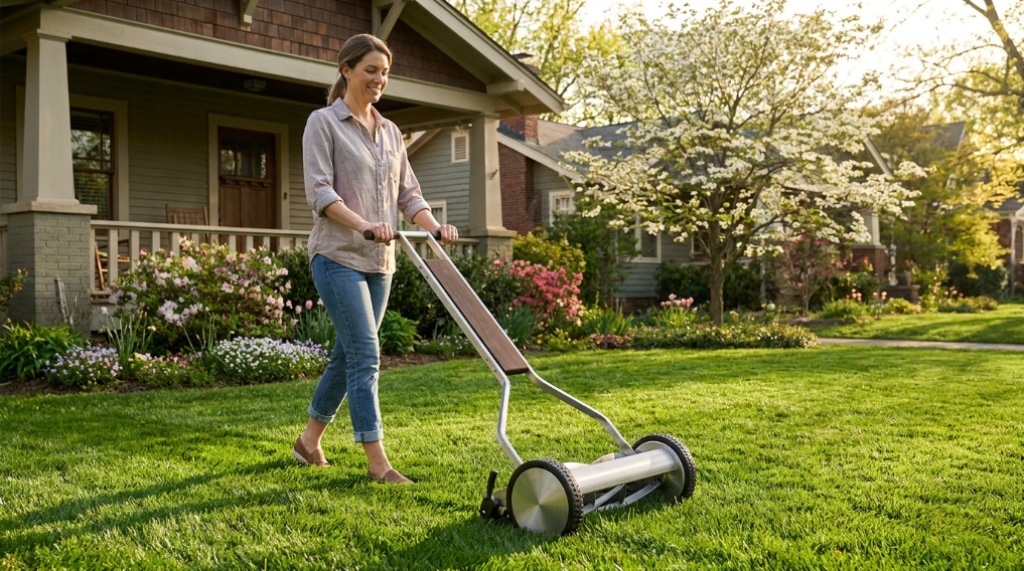
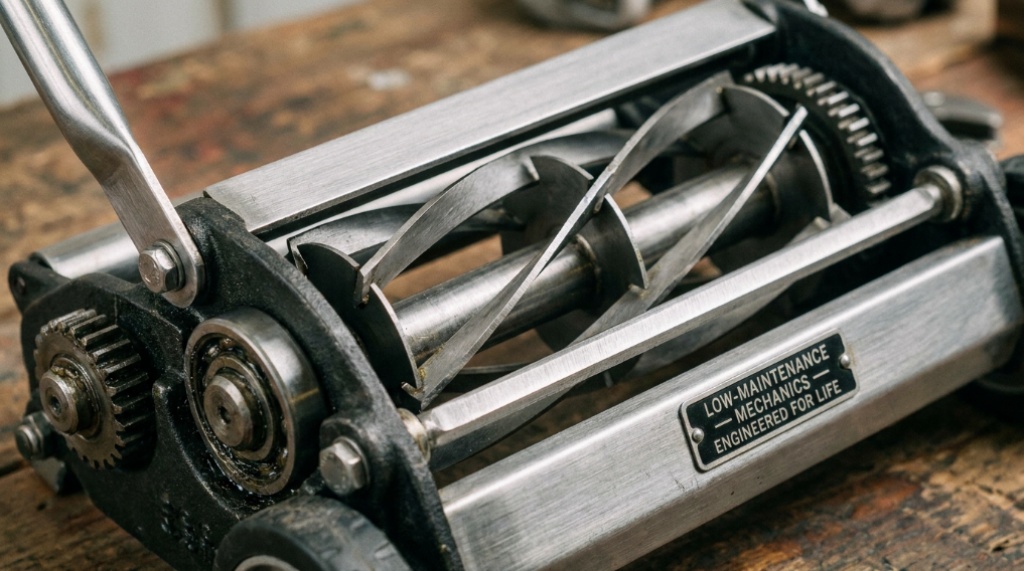
The 1204 is a push reel mower: you walk behind it and push, and the wheels drive a set of spiral cutting blades that scissor against a stationary bed knife. There is no engine, no battery, and no cord. American Lawn Mower Company has made manual reel mowers for decades, and the 1204 is one of its more affordable, entry-level models aimed at small residential lawns.
Because it relies on reel action rather than a single spinning blade, it cuts grass more like scissors than like a rotary mower’s chopping motion. That difference explains both its strengths and its limitations. For a homeowner comparing an eco-friendly manual push mower against a gas or electric option, this cutting method is the single most important thing to understand.
How Reel Cutting Differs From Rotary Cutting
A rotary mower uses one horizontal blade spinning at high speed to slice grass. A reel mower uses several blades on a rotating cylinder that pinch grass against a fixed bar. Reel cuts tend to leave a cleaner edge and are often preferred for fine turf, but they demand more consistent mowing and sharper maintenance. If the blades dull or go out of adjustment, grass gets crushed instead of cut, and you will notice ragged tips and a yellowed look.
Why It Appeals to Eco-Conscious Homeowners
A manual reel mower’s environmental case is straightforward. It burns no gasoline, produces no tailpipe emissions, needs no electricity, and makes very little noise. That means no fuel storage, no oil changes, no spark plugs, and no charging routine. For people trying to reduce lawn-care emissions or simply avoid the noise of a gas mower early on a weekend morning, the appeal is real and easy to understand.
The trade-off is that the energy comes from you. On a small, well-kept lawn this is manageable and even pleasant. On a large or neglected lawn, the physical effort can turn a quick chore into a workout, which is why matching the mower to your lawn size matters more than any marketing claim.
Is the 1204 Really Low-Maintenance?
It is low-maintenance compared with gas mowers, but “low” does not mean “none.” There is no engine to service, which removes most of the routine headaches. What remains is blade care, cleaning, and basic storage.
- Sharpening: Reel blades eventually dull and need sharpening or replacement. A dull reel smashes grass rather than cutting it.
- Adjustment: The gap between the reel blades and the bed knife must stay correct for a clean cut. This can be checked and adjusted with basic tools.
- Cleaning: Grass clippings and moisture cause rust. Wiping the mower down and storing it dry extends its life considerably.
- Lubrication: A few drops of oil on moving parts keeps the wheels and reel turning smoothly.
None of this is difficult, but it is regular. Homeowners who ignore blade condition often conclude the mower “doesn’t work,” when the real issue is a dull or misaligned reel.
Where the 1204 Performs Well — and Where It Struggles
The 1204 is at its best on small, flat, regularly maintained lawns with cool-season or fine-bladed grasses. If you mow often enough that you are only removing a little height each time, the reel slices cleanly and the mower glides easily. This is the scenario the mower is designed for.
It struggles in predictable situations:
- Tall or overgrown grass: Reel mowers cannot handle long grass well; the reel jams or simply pushes grass over instead of cutting it.
- Wet grass: Moisture makes grass clump and stick, clogging the reel and leaving an uneven cut.
- Thick or coarse grasses: St. Augustine and similar wide-bladed varieties are tough for a light manual reel.
- Uneven ground: Bumps and dips cause the reel to scalp high spots and miss low ones.
- Large lawns: The time and effort required grow quickly with area, and pushing becomes tiring.
A useful rule of thumb: if you can mow your lawn comfortably in about 20 to 30 minutes with a push mower, a reel mower is realistic. Beyond that, the effort and time cost start to outweigh the eco-friendly benefits.
Reel Mower vs. Gas and Electric Mowers
Choosing a mower is really a question of priorities: emissions and simplicity versus speed and cutting power. The table below summarizes the main differences.
| Factor | Manual Reel Mower | Gas Mower | Electric Mower |
|---|---|---|---|
| Emissions | None during use | Tailpipe emissions | None at point of use |
| Noise | Very quiet | Loud | Moderate |
| Fuel or power | Human effort | Gasoline and oil | Battery or cord |
| Maintenance | Blade care, cleaning | Engine service, fuel | Battery, blade care |
| Best for | Small, flat, tidy lawns | Large or tough lawns | Medium lawns, low noise |
The practical takeaway: a reel mower excels where lawns are small and maintained, while gas and electric mowers handle tougher conditions with less effort. Many homeowners keep a reel mower for routine light cuts and accept that they still need help in peak growth seasons.
Who Should Buy the 1204 — and Who Shouldn’t
Buy the 1204 if you have a small, level lawn, you mow regularly, and you want to cut emissions, noise, and fuel costs. It is a good fit for townhouse yards, small suburban lots, and homeowners who enjoy the quiet and exercise that manual mowing provides. It is also a sensible choice if you want to avoid the storage and maintenance demands of engine-powered equipment.
Skip it if your lawn is large, hilly, or uneven; if your grass grows fast and often gets ahead of you; or if physical effort is a concern. In those cases, a battery or corded electric mower may deliver most of the environmental benefit with far less strain. For more tips on keeping your yard pristine, check out our guide on how to maintain a healthy green lawn year-rounds .
Practical Tips Before You Buy
- Measure your lawn area and estimate your mowing time honestly.
- Check your grass type — fine blades suit reel mowers better than coarse ones.
- Walk the lawn and note bumps, slopes, and obstacles.
- Plan to mow more often, since reel mowers work best on light cuts.
- Budget for occasional blade sharpening or replacement.
Frequently Asked Questions
Does a reel mower need sharpening?
Yes. Reel blades dull over time and need periodic sharpening or replacement. A dull reel crushes grass instead of cutting it, which leaves ragged tips and a duller-looking lawn. How often depends on use and lawn conditions.
Can the 1204 cut tall grass?
Not well. Reel mowers are designed for regular, light cuts. Tall or overgrown grass tends to jam the reel or get pushed over rather than cut, so you may need to trim first or mow in stages.
Is a manual reel mower good for large lawns?
Usually not. The physical effort and mowing time increase with lawn size. For larger lawns, a battery or gas mower generally saves considerable time and energy.
Do reel mowers work on wet grass?
Poorly. Wet grass clumps, sticks to the blades, and clogs the reel, producing an uneven cut. It is best to mow when the grass is dry.
How much maintenance does a reel mower need?
Less than a gas mower, but more than none. Expect blade sharpening or adjustment, cleaning after use, light lubrication, and dry storage to prevent rust.
Conclusion
The American Lawn Mower 1204 is a solid choice for homeowners with small, level, well-kept lawns who want to cut emissions, noise, and fuel costs. Its low-maintenance design removes most engine chores, but it still needs blade care and cleaning, and it performs best on regular, light cuts. Before buying, match the mower to your lawn size and grass type. If your yard is small and manageable, the 1204 rewards you with a quiet, clean cut; if it is large or rough, an electric mower may serve you better.