
Pruning a tree for the first time can feel intimidating. There are so many tools available, and it is hard to know where to start. However, once you understand the basics, the process becomes straightforward and even enjoyable. The right tools make pruning safer, easier, and more effective.
This guide covers everything a beginner needs to know. You will learn about the most common pruning tools, how each one works, and when to use them. By the end, you will feel confident stepping into your garden and getting to work.
Why Pruning Matters for Tree Health
Pruning is not just about making a tree look tidy. It plays a direct role in the health and longevity of the tree. Removing dead or diseased branches stops the spread of decay. Cutting back overcrowded growth allows sunlight and air to reach the inner canopy. Additionally, pruning encourages new growth and helps the tree develop a strong, balanced structure.
When you prune at the right time and with the right tools, the tree heals quickly. When you prune incorrectly, you can cause lasting damage. Therefore, investing a little time in learning the basics is well worth it.
Getting to Know the Main Types of Pruning Tools
Beginners are often surprised by how many pruning tools exist. Each one is designed for a specific job. Using the right tool for the right task protects both the tree and the person doing the work.
Hand Pruners
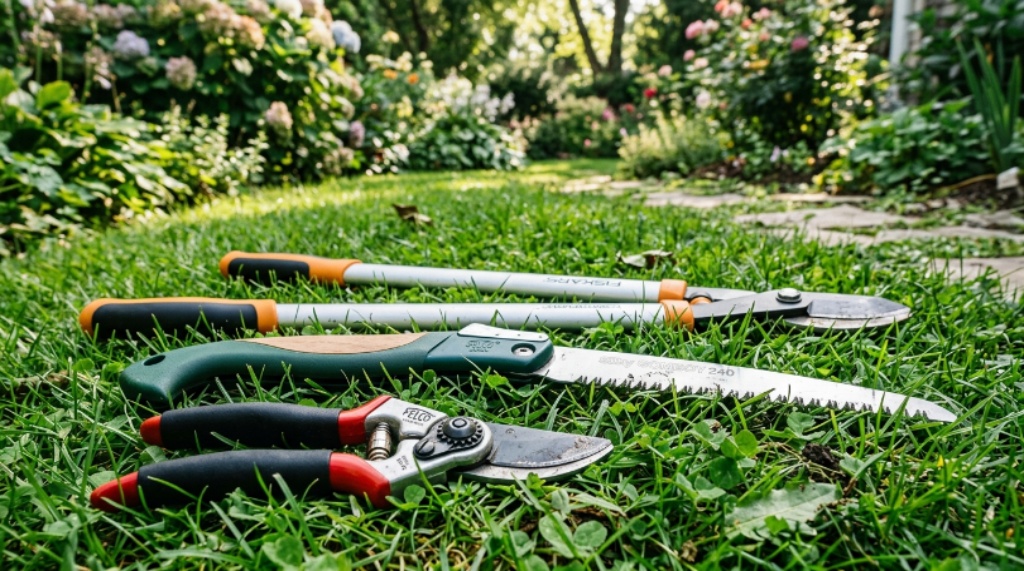
Hand pruners, also called secateurs, are the most essential tool in any pruner’s kit. They are small, handheld, and designed for cutting branches up to about three-quarters of an inch in diameter. They fit comfortably in one hand and are easy to carry around the garden.
There are two main types. Bypass pruners work like scissors, with two curved blades that pass each other. They make clean, precise cuts and are the preferred choice for most gardeners. Anvil pruners have one sharp blade that closes onto a flat surface. They are slightly more powerful but can crush stems if used carelessly.
For most beginners, bypass hand pruners are the best starting point. They are versatile, widely available, and easy to use.
Manual Loppers
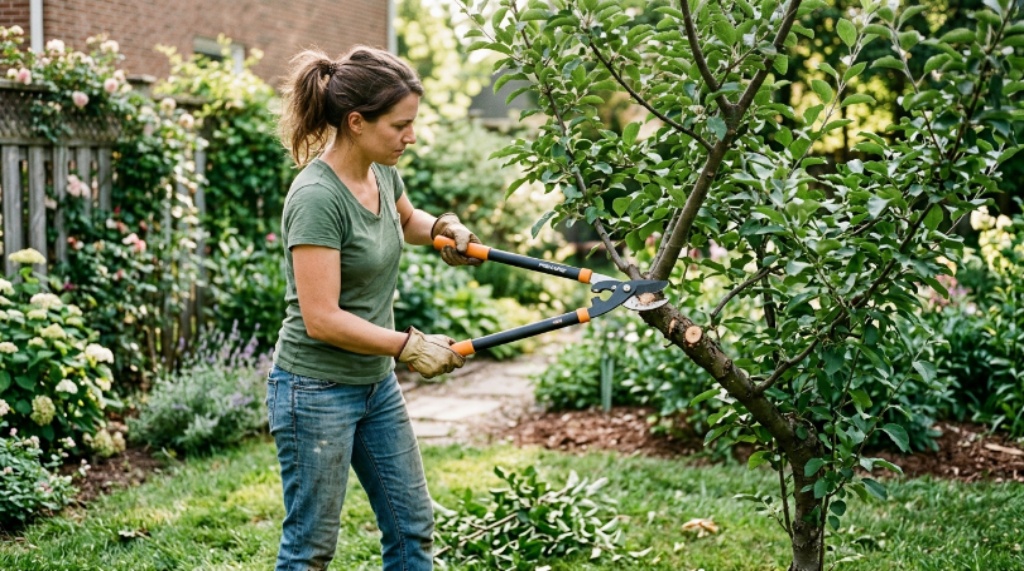
Manual loppers are one of the most useful gardening cutting tools for beginners tackling thicker branches. They look like oversized hand pruners and come with long handles, typically between 18 and 36 inches in length. The long handles give you extra leverage, which means you can cut through branches that would be impossible to manage with hand pruners alone.
Manual loppers work well on branches between one and two inches in diameter. Some heavy-duty models can handle branches up to two and a half inches thick. Additionally, the long handles allow you to reach into the tree canopy without needing a ladder for lower branches.
When choosing manual loppers, look for models with cushioned grip handles and a shock-absorbing bumper. These features reduce hand and arm fatigue during longer pruning sessions. Bypass-style loppers are generally better than anvil-style for the same reasons that apply to hand pruners.
Pruning Saws
For branches thicker than two inches, a pruning saw is the right tool. These saws are designed differently from woodworking saws. They cut on the pull stroke rather than the push stroke, which gives you more control in tight spaces between branches.
Folding pruning saws are a popular choice for beginners. They are compact, safe to carry, and easy to store. Fixed-blade saws with a pistol grip handle offer more cutting power and are better suited for larger jobs. However, for most home garden tasks, a folding saw with a blade between seven and ten inches is more than adequate.
Pole Pruners
Pole pruners extend your reach significantly. They consist of a pruning head mounted on a long pole, which can often be extended to reach heights of ten feet or more. This allows you to trim upper branches without climbing a ladder, which is a real safety advantage.
Most pole pruners come with a bypass pruning head for smaller cuts and a saw attachment for thicker branches. Electric and battery-powered versions are also available. However, for beginners pruning a few trees at home, a manual pole pruner is a cost-effective and reliable option.
Hedge Shears
Hedge shears look like giant scissors and are used for shaping hedges and shrubs rather than individual branch removal. They are not typically used for tree pruning in the same way as loppers or saws. However, they are a useful addition to your gardening cutting tools collection if you also maintain hedges or topiary in your garden.
How to Choose the Right Tool for the Job
Matching the tool to the branch size is the most important rule. Using a small hand pruner on a thick branch forces the blade and damages both the tool and the tree. Using a large saw on a thin twig is equally awkward and unnecessary.
Here is a simple guide to follow:
- Branches up to 3/4 inch thick: use hand pruners
- Branches between 3/4 inch and 2 inches: use manual loppers
- Branches between 2 and 4 inches: use a pruning saw
- Branches above 4 inches or high up in the canopy: use a pole pruner or consult a professional arborist
Following this guide makes pruning faster, cleaner, and safer.
What to Look for When Buying Pruning Tools
Quality matters when it comes to pruning tools. Poorly made tools dull quickly, require more effort, and make ragged cuts that harm the tree. Therefore, it pays to buy tools that are well-constructed, even if they cost a little more upfront.
Blade Quality
Look for blades made from high-carbon steel or stainless steel. High-carbon steel holds a sharp edge longer but requires more maintenance to prevent rust. Stainless steel is more resistant to moisture and easier to maintain. Either option is suitable for home gardeners.
Handle Comfort and Grip
Handles should feel secure and comfortable in your hand. Rubber or foam grips reduce slipping and absorb vibration. For loppers and saws, longer handles give more leverage and reach. Additionally, ergonomic handle designs reduce strain on the wrists and joints during extended use.
Weight and Balance
Heavy tools tire your hands and arms quickly. Lightweight tools made with aluminum handles offer a good balance of strength and comfort. Hold the tool before buying if possible, or check the weight listed in the product specifications when shopping online.
Ease of Maintenance
Good pruning tools need regular sharpening, cleaning, and oiling. Look for tools with replaceable blades if possible. This extends the life of the tool significantly and saves money in the long run.
Basic Pruning Techniques Every Beginner Should Know
Having the right tools is only half the battle. Using them correctly matters just as much.
Always cut just outside the branch collar, which is the slightly raised ring of bark where the branch meets the trunk or parent limb. Cutting here allows the tree to seal the wound efficiently. Cutting too close removes the collar and slows healing. Cutting too far out leaves a stub that can rot.
For larger branches, use the three-cut method. First, make a small undercut about a foot from the trunk to prevent bark from tearing. Second, cut through the branch a few inches further out from the first cut. Third, remove the remaining stub cleanly just outside the branch collar. This method protects the tree and gives you a clean, manageable cut.
Additionally, always prune with clean, sharp blades. Dirty or dull blades can transfer disease between plants and cause crushing rather than cutting. Wipe blades with a cloth dampened with rubbing alcohol between trees, especially if you are cutting away diseased wood.
Caring for Your Pruning Tools
Well-maintained tools last longer and perform better. After each use, wipe blades clean with a dry cloth. Remove any sap with a cloth dampened in household oil or specialized tool cleaner. Store tools in a dry location to prevent rust.
Sharpen blades regularly using a sharpening stone or a dedicated blade sharpener. A sharp blade requires less force and produces cleaner cuts. Additionally, apply a thin coat of oil to metal parts before storing tools for the winter. This simple step prevents corrosion and keeps the tools ready for the next season.
Conclusion
Pruning does not have to be complicated. With the right tools and a basic understanding of technique, even complete beginners can maintain healthy, attractive trees. Start with hand pruners and manual loppers as your foundation, then build your collection as your confidence and needs grow.
Always match the tool to the branch size, keep your blades sharp and clean, and follow correct cutting technique to support tree health. Quality gardening cutting tools are an investment that pays off every season. Take care of them, use them correctly, and your trees will reward you with strong growth and lasting beauty.
Frequently Asked Questions
What is the best pruning tool for a complete beginner?
A pair of bypass hand pruners is the best starting point. They are affordable, easy to use, and suitable for most light pruning tasks. Adding a pair of manual loppers for thicker branches gives you a solid beginner toolkit.
When is the best time of year to prune trees?
Late winter or early spring, just before new growth begins, is ideal for most trees. Pruning during dormancy reduces stress on the tree and lowers the risk of pest and disease problems. However, dead or damaged branches can be removed at any time of year.
How do I know if my pruning tools need sharpening?
If you find yourself applying extra force to make a cut, or if the cut leaves a ragged or crushed edge rather than a clean slice, the blade needs sharpening. Regular sharpening after every few hours of use keeps tools performing at their best.
Can I use the same pruning saw for all branch sizes?
A pruning saw works on branches from about two inches and up. However, using a saw on very thin branches is awkward and unnecessary. Matching the tool to the branch size gives cleaner cuts and protects both the tree and the tool.
How do I prevent spreading disease between trees when pruning?
Wipe your blades with a cloth soaked in rubbing alcohol or a diluted bleach solution between cuts, especially when removing diseased wood. This simple practice stops pathogens from transferring between plants and protects the health of your entire garden.