

In California, where golden sunshine meets persistent drought, maintaining a vibrant lawn is both a challenge and an opportunity. With water scarcity and environmental concerns at the forefront, eco-friendly lawn care has emerged as a vital practice for homeowners. This comprehensive guide explores safe, green, and sustainable lawn care tailored to California’s unique climate and regulations. From water-saving techniques to organic solutions, you’ll discover how to create a stunning lawn that supports the planet and complies with state laws.
The Need for Eco-Friendly Lawn Care in California
California’s Mediterranean climate, with its hot, dry summers and mild, wet winters, poses significant challenges for lawn maintenance. The state’s frequent droughts have led to strict water usage regulations, particularly for landscaping. According to the University of California Agriculture and Natural Resources, landscape irrigation accounts for approximately 50% of residential water consumption, with lawns using 40% to 60% of that (UC Agriculture and Natural Resources). This substantial water demand highlights the urgency of adopting eco-friendly lawn care practices.
Additionally, traditional lawn care often relies on gas-powered equipment and chemical fertilizers, contributing to air and water pollution. In response, California implemented a ban on the sale of new gas-powered lawn equipment starting January 1, 2024, encouraging the use of electric alternatives. These regulations reflect the state’s commitment to reducing emissions and promoting sustainable practices, making eco-friendly lawn care not just a choice but a necessity.
Benefits of Eco-Friendly Lawn Care
Embracing eco-friendly lawn care offers a range of advantages for homeowners, the environment, and local communities:
- Water Conservation: Drought-tolerant plants and efficient irrigation systems significantly reduce water usage, lowering bills and supporting California’s conservation efforts.
- Reduced Chemical Impact: Organic fertilizers and natural pest control methods minimize runoff, protecting waterways and wildlife.
- Cleaner Air and Less Noise: Electric or battery-powered tools produce no emissions and are quieter, improving air quality and neighborhood tranquility.
- Cost Savings: While initial investments in new equipment or plants may be needed, long-term savings on water, fertilizers, and maintenance are substantial.
- Enhanced Biodiversity: Native plants and diverse landscapes support pollinators and wildlife, fostering healthier ecosystems.
These benefits align with California’s environmental goals and provide homeowners with practical, cost-effective solutions.

Nine Steps to Eco-Friendly Lawn Care
To transform your lawn into a sustainable masterpiece, follow these nine actionable steps, tailored to California’s conditions:
-
Overseed Annually for Resilience
Overseeding promotes a dense lawn that naturally outcompetes weeds, reducing the need for herbicides. For warm-season grasses common in Southern California, overseed in spring; for cool-season varieties in Northern California, do so in fall. Select drought-tolerant grass types like California fescue to minimize water and chemical needs.
-
Mow with Precision
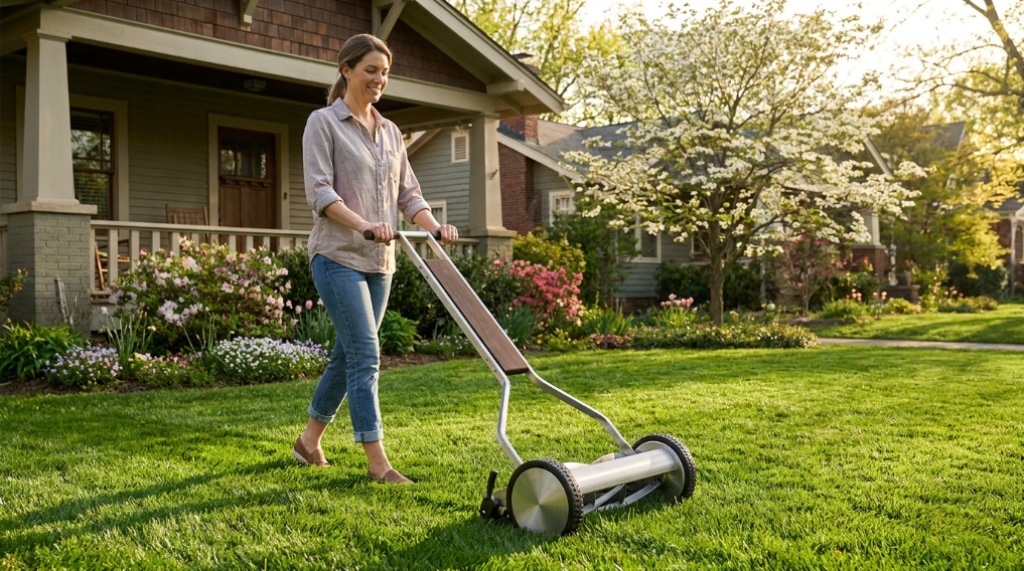
Adhere to the “one-third rule,” cutting no more than one-third of the grass blade at a time to encourage deep root growth and weed suppression. Keep mower blades sharp for clean cuts, and use a mulching mower to recycle clippings as natural fertilizer. Mow higher to shade the soil, especially in California’s intense sun.
-
Nourish the Soil Naturally
Test your soil annually to determine nutrient needs. Apply organic fertilizers, such as compost or slow-release granules, to feed the soil rather than just the grass. Avoid bagging clippings and leaves; mulch them or compost them to reduce waste and enrich the soil, aligning with California’s compost-spreading mandates.
-
Minimize Pesticides with IPM
Use Integrated Pest Management (IPM) to prevent pests naturally. Aerate and dethatch your lawn to improve soil health, and remove debris where pests hide. Water deeply but infrequently, ideally before 9 a.m., to comply with California’s watering restrictions and reduce evaporation and disease.
-
Implement Water-Saving Systems
Install rain barrels to capture runoff and use drip irrigation for gardens to minimize waste. Smart irrigation controllers adjust watering based on weather, ensuring efficient use. These systems are critical in California, where landscape irrigation accounts for 9% of statewide water use.
-
Reduce Turf Areas
Replace portions of your lawn with drought-tolerant groundcovers, xeriscaping, or native plants. Clover lawns, requiring minimal water and no mowing, are gaining popularity. Native plants thrive with little care and support local pollinators, aligning with California’s biodiversity goals.
-
Switch to Electric Tools
Transition to electric or battery-powered mowers, trimmers, and blowers to comply with California’s 2024 gas-powered equipment ban. These tools reduce emissions and noise, with models like the BLACK+DECKER BESTA510 offering reliable performance for residential use (LawnStarter).
-
Boost Biodiversity
Apply organic mulch, such as wood chips, to retain moisture and suppress weeds. Create habitat gardens with native plants like yarrow or black-eyed Susan to attract beneficial insects. Diverse lawns reduce the need for chemical interventions and enhance local ecosystems.
-
Choose Organic Treatments
Opt for organic fertilizers (e.g., compost, worm castings) and natural pesticides (e.g., neem oil, diatomaceous earth). Use corn gluten meal as a weed preventer and practice manual weeding. These methods comply with California’s strict pesticide regulations and protect pollinators.
California-Specific Regulations and Incentives
California’s commitment to sustainability is evident in its lawn care regulations:
- Water Restrictions: Many regions limit watering to early morning or evening hours to reduce evaporation, with specific schedules varying by locality.
- Gas-Powered Equipment Ban: Effective January 1, 2024, the sale of new gas-powered lawn equipment is prohibited, affecting mowers, trimmers, and blowers. Existing equipment can still be used, but incentives encourage switching to electric models.
- Turf Replacement Rebates: Water districts offer rebates for replacing grass with drought-tolerant landscapes, often covering costs for plants and irrigation upgrades.
- Pesticide Regulations: Strict rules limit the use of harmful pesticides, particularly those affecting pollinators, encouraging organic alternatives.
- Compost Mandates: State laws promote organic compost use to reduce greenhouse gases and improve soil health.
Incentives include the Clean Off-Road Equipment (CORE) program, offering vouchers up to $1,200 for electric tools, and tax credits under the Inflation Reduction Act, providing up to 30% off qualifying equipment (California Air Resources Board).
Eco-Friendly Lawn Alternatives for California
For those seeking low-maintenance, water-wise options, consider these lawn alternatives:
- Frog Fruit (Phyla nodiflora): A native groundcover that’s drought-tolerant, requires no mowing, and saves up to 60% on water. It supports pollinators and handles light traffic, making it ideal for California (Sod and Seed).
- Native Grasses: California fescue and buffalo grass thrive in local conditions, requiring minimal water and care.
- Clover Lawns: White Dutch clover or microclover fixes nitrogen, reducing fertilizer needs, and attracts bees.
- Xeriscaping: Combines rocks, mulch, and succulents for a striking, low-water landscape.
These alternatives align with California’s water conservation goals and enhance yard aesthetics.
Water Usage Statistics and Impact
Understanding the water demands of lawns is crucial for sustainable care:
|
Statistic |
Details |
| Total Landscape Water Use | Accounts for 9% of California’s statewide water use. |
| Residential Landscape Use | Represents 7% of total water use, with lawns using 40%–60% of that. |
| Residential Water Allocation | Up to 50% of residential water goes to landscaping. |
These figures highlight the potential for significant water savings through eco-friendly practices, especially in a state prone to drought.
Expert Tips for Sustainable Lawns
Lawn care professionals offer valuable insights:
- Focus on Soil Health: “Healthy soil is the key to a resilient lawn,” says John Doe, an organic lawn care specialist. “Use compost to build organic matter, reducing water and fertilizer needs.”
- Aerate Regularly: “Aeration alleviates soil compaction, common in California’s clay soils, improving water and nutrient uptake,” advises Jane Smith, a landscape architect.
- Choose Native Plants: Experts recommend native species for their adaptability and low maintenance, supporting local ecosystems.
Customer Reviews and Experiences
Homeowners across California share positive feedback on eco-friendly lawn care:
- “Switching to organic fertilizers and cutting back on watering saved us hundreds on our water bill, and our lawn looks fantastic,” says Mike Johnson from San Diego.
- “We replaced our grass with Frog Fruit and native plants. It’s low-maintenance and beautiful,” notes Sarah Lee from Los Angeles.
These testimonials reflect the practical benefits of sustainable practices.
Frequently Asked Questions
-
What are the best drought-tolerant plants for California lawns?
Frog Fruit, California fescue, buffalo grass, and succulents thrive with minimal water.
-
How can I convert my lawn to be more eco-friendly?
Overseed with drought-tolerant grasses, use organic fertilizers, install smart irrigation, and replace turf with native plants.
-
What are the benefits of organic fertilizers?
They enhance soil structure, promote microbial activity, and reduce runoff, protecting waterways.
-
Are there incentives for eco-friendly lawn equipment?
Yes, California offers rebates and tax credits for electric tools through programs like CORE.
-
How does the gas-powered equipment ban affect me?
You can’t buy new gas-powered equipment after 2023, but existing tools are usable. Electric options are encouraged.
-
Can I maintain a green lawn while saving water?
Yes, use water-efficient grasses, deep but infrequent watering, and mulch to retain moisture.
-
What are low-maintenance lawn alternatives for California?
Clover lawns, xeriscaping, and native groundcovers like yarrow are low-maintenance and sustainable.
Conclusion
Eco-friendly lawn care in California is a powerful way to create a beautiful, sustainable yard while addressing the state’s environmental challenges. By adopting water-saving practices, organic treatments, and electric tools, you can reduce your ecological footprint and comply with regulations. Whether you choose a lush clover lawn or a vibrant xeriscape, every step toward sustainability makes a difference. Start transforming your lawn today and contribute to a greener, healthier California.
Featured Snippet: How to Make Your Lawn Eco-Friendly in California
Question: How can I make my lawn eco-friendly in California?
Answer: To make your lawn eco-friendly in California, choose drought-tolerant plants like Frog Fruit, which saves up to 60% on water. Use drip irrigation or smart controllers to optimize watering, aligning with state restrictions. Apply organic compost and natural pest controls to avoid chemical runoff. Switch to electric lawn tools to comply with the 2024 gas-powered equipment ban, reducing emissions. These practices create a sustainable, vibrant lawn that supports California’s ecosystems and conserves resources.
Read More: