
A perfectly manicured lawn is the pride of many homeowners, a testament to diligence and the right tools. But what happens when your trusty lawnmower, the stalwart soldier in your landscaping arsenal, starts to billow smoke? Panic might be the first reaction, visions of costly repairs dancing in your head. However, a smoking lawnmower isn’t always a sign of impending doom. More often than not, it’s a cry for help, an indication that something needs attention. Understanding the ‘why’ behind the smoke is the first step to a solution, getting you back to pristine stripes and the satisfying hum of a healthy engine.
The color of the smoke is your primary clue, a diagnostic signal from your mower’s heart. Is it white and wispy, thick and blue, or dark and black? Each hue tells a different story about what’s happening internally. This article will delve into the common culprits behind a smoking lawnmower, breaking down the causes by smoke color, offering troubleshooting insights, and providing preventative measures to keep your machine running smoothly for seasons to come. We’ll also address those frequently asked questions that pop up when your green machine starts acting like a fog machine.
Decoding the Smoke Signals: What Your Mower is Trying to Tell You
When your lawnmower starts to smoke, the first and most crucial observation is the color of the smoke. This will significantly narrow down the potential issues, guiding you toward the correct troubleshooting path. Let’s break down the common smoke colors and their likely causes:
White or Bluish-White Smoke: The Oil Intruder
The most common reason for white or bluish-white smoke is burning oil. Oil is essential for lubricating the engine’s moving parts, but it’s supposed to stay within the crankcase and lubrication system. When it finds its way into the combustion chamber or onto hot engine components, it burns off, producing that characteristic white or blue-tinged smoke. Here are the primary scenarios:
- Overfilling the Oil Reservoir: This is a very frequent and easily avoidable mistake. If you’ve recently changed or topped off the oil, you might have inadvertently added too much. Excess oil can get splashed into the cylinder or blown into the breather tube and then into the carburetor, where it gets burned with the fuel. Always use the dipstick to check the oil level, ensuring it’s between the ‘add’ and ‘full’ marks. It’s better to be slightly under than significantly over. If you’ve overfilled, you’ll need to drain the excess oil.
- Spilled Oil: During an oil change or refill, some oil might have spilled onto the hot engine block or muffler. As the engine heats up, this spilled oil will burn off, creating smoke. This type of smoke is usually temporary and should dissipate after a few minutes of running the mower as the spilled oil is consumed.
- Tilting the Mower Incorrectly: This is another common cause, especially after maintenance like cleaning the deck or changing the blade. Most push mowers have a specific way they should be tilted (usually with the spark plug facing upwards or the carburetor and air filter side up). Tilting it the wrong way can cause oil to flow from the crankcase into the cylinder or the air filter and carburetor. When you restart the mower, this oil burns off. Always consult your owner’s manual for the correct procedure for tilting your specific model.
- Worn Piston Rings or Cylinder: This is a more serious internal engine problem. Piston rings create a seal between the piston and the cylinder wall, preventing oil from the crankcase from entering the combustion chamber. If these rings are worn, damaged, or stuck, oil can seep past them and burn during combustion. Similarly, a worn or scored cylinder can have the same effect. This usually results in persistent blue smoke, especially under load, and may be accompanied by increased oil consumption and a loss of power. This type of issue often requires professional repair.
- Blown Head Gasket: The head gasket seals the cylinder head to the engine block. If it fails between an oil passage and the combustion chamber, oil can leak into the cylinder and burn. A blown head gasket can also cause other symptoms like loss of compression, overheating, or coolant (in liquid-cooled engines, though less common in walk-behind mowers) mixing with oil. This is a significant repair.
- Faulty Crankcase Breather System: The crankcase breather system relieves pressure that builds up in the crankcase as the engine runs. If the breather is clogged or malfunctioning, pressure can build up and force oil past seals or into the air intake and combustion chamber.
- Using the Wrong Grade or Type of Oil: Using an oil viscosity that is too thin for your engine and operating temperatures can sometimes lead to it getting past seals more easily and burning off. Always use the oil type and viscosity recommended in your lawnmower’s owner’s manual.
Black Smoke: The Fuel Overload
Black smoke is a clear indicator that your mower’s engine is “running rich,” meaning there’s too much gasoline and not enough air in the fuel-air mixture being burned in the combustion chamber. This incomplete combustion results in sooty, black smoke. Here are the usual suspects:
- Dirty or Clogged Air Filter: This is by far the most common cause of black smoke. The air filter prevents dirt, dust, and debris from entering the engine. Over time, it becomes clogged, restricting airflow. With less air available, the fuel-air mixture becomes overly rich in fuel. Replacing or cleaning the air filter (depending on whether it’s a paper or foam type) is a simple and often effective fix. Air filters are relatively inexpensive and should be checked and changed regularly as part of routine maintenance.
- Choke Stuck in the Closed Position: The choke is used to enrich the fuel mixture for starting a cold engine. It’s a butterfly valve that restricts airflow into the carburetor. If the choke mechanism is stuck, broken, or inadvertently left in the ‘on’ or ‘closed’ position after the engine has warmed up, it will continuously cause a rich fuel mixture and black smoke. Check the choke linkage and ensure it’s operating correctly and fully opening.
- Carburetor Issues: The carburetor is responsible for mixing air and fuel in the correct proportions. If the carburetor is dirty, clogged with old fuel deposits (varnish), or has a stuck float or a misadjusted float level, it can deliver too much fuel to the engine. A leaking needle valve in the carburetor can also cause flooding. Cleaning the carburetor thoroughly or rebuilding/replacing it might be necessary. Sometimes, a simple adjustment to the carburetor’s mixture screws (if present and adjustable on your model) can resolve the issue, though this is often best left to someone with experience.
- Old or Contaminated Fuel: While less likely to cause black smoke directly (more often causing starting or running problems), very old fuel can sometimes contribute to poor combustion. More critically, fuel contaminated with water or other substances can affect carburetor function and lead to an improper mixture.
- Faulty Spark Plug: A spark plug that is fouled (covered in carbon deposits), damaged, or of the incorrect heat range might not ignite the fuel mixture efficiently. While this can sometimes lead to misfires and unburnt fuel (which might appear as smoke), it’s often accompanied by other running issues.
A Note on Electric Mowers and Smoke
If you have an electric lawnmower (corded or battery-powered) that is smoking, the causes are entirely different. Electric mowers don’t burn oil or fuel. Smoke from an electric mower usually indicates a severe electrical problem, such as:
- Overheating Motor: This can be due to overloading the mower (e.g., cutting very tall, thick, or wet grass), a seized bearing putting extra strain on the motor, or an internal motor fault.
- Burnt-out Motor Windings: This is a critical failure of the electric motor itself.
- Electrical Short Circuit: Damaged wiring or components can lead to short circuits, generating heat and smoke.
- Overheating Battery (for cordless models): A failing battery or a problem with the battery management system could cause overheating and, in extreme cases, smoke or fire.
If an electric mower is smoking, immediately unplug it (if corded) or remove the battery (if cordless) and do not attempt to use it. Electric mower smoke often signifies a fire hazard and typically requires professional repair or replacement of the unit.
Related: What are the Safety Precautions for Cutting Grass?
Troubleshooting Steps: A General Guide
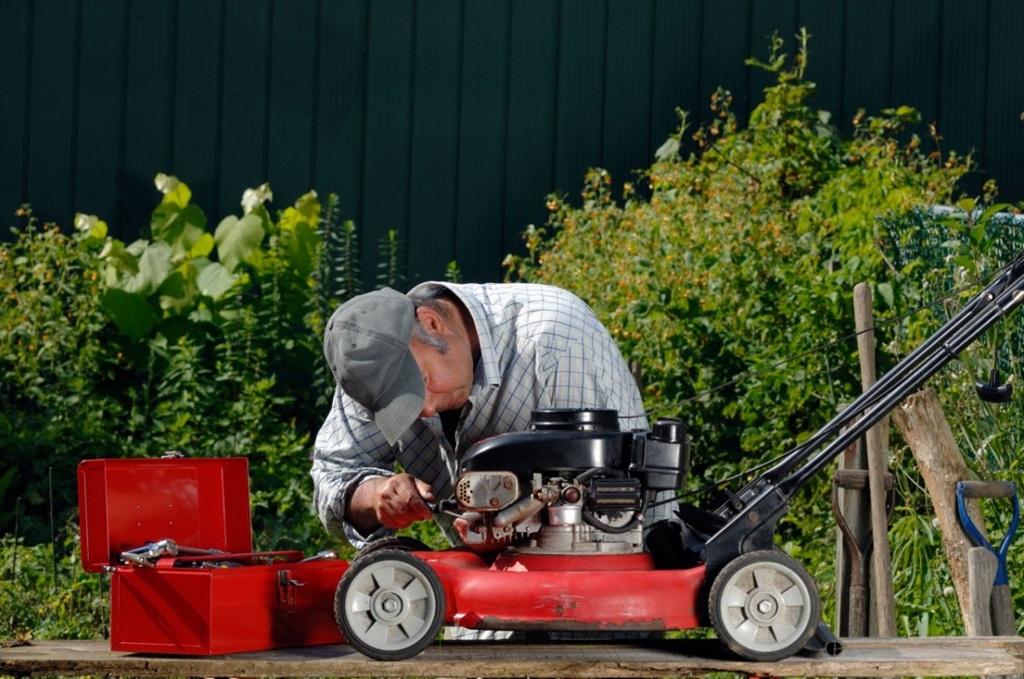
Before diving into complex repairs, here’s a logical approach to troubleshooting a smoking lawnmower (primarily for gasoline models):
- Safety First! Always disconnect the spark plug wire before doing any work on the mower deck or engine to prevent accidental starting. Let the engine cool down completely if it has been running, as many components will be hot.
- Identify the Smoke Color: As discussed, this is your primary diagnostic tool.
- Recall Recent Actions: Did the smoking start after an oil change? After tilting the mower? After hitting an obstruction? This can provide valuable clues.
- Check the Oil Level and Condition:
- If white/blue smoke: Is the oil level too high? Drain the excess. Is it very old or dirty? Consider an oil change with the correct grade of oil.
- Smell the oil. Does it smell strongly of gasoline? This could indicate a carburetor problem flooding the crankcase or stuck piston rings.
- Inspect the Air Filter:
- If black smoke: Remove the air filter. Is it dirty or oily? Clean or replace it. Try running the mower briefly without the air filter (in a clean environment) to see if the black smoke clears. If it does, the filter was the culprit. Do not operate for long without a filter.
- Check the Choke: Ensure the choke lever moves freely and is in the ‘run’ or ‘open’ position when the engine is warm.
- Examine the Spark Plug: Remove and inspect the spark plug.
- Is it black and sooty? (Indicates rich mixture/black smoke)
- Is it oily? (Indicates oil burning/white or blue smoke)
- Is it damaged or worn? Replace it with the correct type.
- Inspect the Mower Deck and Undercarriage: Sometimes, debris, such_as a plastic bag or string, can get wrapped around the blade spindle or touch the muffler, melt, and produce smoke.
- Consider Fuel Quality: If you’re using old fuel (more than 30 days old, especially if not treated with stabilizer), try draining it and refilling with fresh gasoline.
- Observe Mowing Conditions:
- Are you mowing on a very steep slope (greater than 15 degrees for many mowers)? This can cause oil to enter the cylinder. Mow side-to-side on slopes, not up and down, if possible, or consult your manual.
- Is the grass extremely tall or wet? This can overload the engine, potentially leading to overheating or, in some cases, incomplete combustion.
Related: Essential Tools for Lawn Maintenance: Reviews, Solutions, Pros and Cons, and FAQs
When to Call a Professional
While many common causes of a smoking lawnmower can be addressed with basic maintenance, some issues require more expertise and specialized tools. It’s time to call a small engine repair professional if:
- You’re uncomfortable performing the troubleshooting steps yourself.
- The smoke is persistent and blue, suggesting internal engine wear like piston rings or valve seals.
- You suspect a blown head gasket.
- The black smoke continues even after replacing the air filter and checking the choke, pointing to a more complex carburetor problem.
- The engine has suffered a significant mechanical failure (e.g., loud knocking noises accompanying the smoke).
- Your electric mower is smoking.
Attempting complex internal engine repairs without the proper knowledge can often lead to more damage and higher repair costs in the long run.
People Also Ask (FAQs)
Here are some frequently asked questions about smoking lawnmowers:
Q1: Why is my lawnmower smoking white after I tilted it?
A: This is very common. When you tilt a lawnmower (especially a 4-stroke engine) the wrong way, oil from the crankcase can flow into the cylinder or the air filter/carburetor. When you restart it, this oil burns off, producing white or bluish smoke. It should clear up after a few minutes. Always check your manual for the correct way to tilt your mower.
Q2: My lawnmower started smoking after I hit a rock. What’s wrong?
A: Hitting a rock can cause several issues. It might have bent the crankshaft, which is a serious problem that can lead to vibrations and seal damage, potentially causing oil leaks and smoke. It could also have damaged the blade or flywheel key. If smoking started immediately after an impact, it’s best to have it inspected by a professional to check for bent components or internal damage. Sometimes, the sudden stop can also force oil into unusual places.
Q3: Can low oil cause my lawnmower to smoke?
A: Generally, low oil itself doesn’t directly cause smoke. However, running an engine with very low oil can lead to overheating and excessive wear on internal components like piston rings and seals. Once these are damaged, the engine may start burning oil and smoking (typically blue/white smoke). So, while low oil isn’t the immediate cause of smoke, the damage it causes can lead to smoking.
Q4: My lawnmower is smoking and losing power. What could be the issue?
A: This combination often points to a more significant problem. * White/Blue Smoke + Power Loss: Could be severely worn piston rings, a blown head gasket, or other internal engine damage leading to poor compression and oil burning. * Black Smoke + Power Loss: Often due to a severely clogged air filter starving the engine of air, or a major carburetor problem causing an excessively rich mixture that bogs down the engine. In either case, a thorough inspection is needed.
Q5: Is it safe to use my lawnmower if it’s smoking a little?
A: If it’s just a small amount of white smoke that appears briefly after tilting or an oil spill and then clears up, it’s usually okay. However, if the smoke is persistent, thick, or black, it’s best not to continue using the mower until the issue is diagnosed and fixed. Ignoring the problem can lead to more severe engine damage, increased emissions, and even a potential fire hazard in extreme cases.
Q6: How often should I change my lawnmower’s air filter to prevent smoking?
A: This depends on your mowing conditions. In dusty environments, you might need to clean or replace it more frequently. A general guideline is to check it every 25 hours of use or at least once per mowing season. If it looks dirty, replace it (if paper) or clean it (if foam, according to manufacturer instructions). A clean air filter is crucial for preventing black smoke and ensuring optimal engine performance.
Q7: My brand new lawnmower is smoking. Should I be concerned?
A: Sometimes, new mowers might smoke a little during the very first run. This can be due to protective coatings or assembly lubricants burning off the engine or muffler. This type of smoke is usually light, has a distinct smell, and should disappear within 5-15 minutes of operation. However, if the smoke is heavy, persists, or is black or dark blue, it could indicate an issue like overfilling with oil at the factory (uncommon but possible), a defect, or damage during shipping. In such cases, contact the dealer or manufacturer.
Related: Essential Lawn Maintenance Tools Every Homeowner Needs
Conclusion: Keeping Your Mower Smoke-Free and Your Lawn Pristine
A smoking lawnmower can be alarming, but with a little knowledge, it’s often a manageable issue. By understanding what the different colors of smoke signify – white or blue for oil-related problems, and black for fuel-air mixture issues – you can take targeted troubleshooting steps. Many common causes, such as an overfilled oil reservoir, a spilled oil burn-off, or a dirty air filter, are relatively simple to fix with basic DIY maintenance.
Regular preventative maintenance is your best defense against a smoking mower. This includes routinely checking and changing the oil with the correct grade, cleaning or replacing the air filter, using fresh fuel, checking the spark plug, and storing and handling your mower correctly, especially when it comes to tilting. Consulting your owner’s manual for specific maintenance schedules and procedures for your model is always recommended.
If the problem seems beyond a simple fix, or if you suspect serious internal engine damage, don’t hesitate to seek help from a qualified small engine mechanic. Addressing the issue promptly will not only get your mower back in top condition but can also prevent more costly repairs down the line, ensuring you can continue to enjoy a beautifully maintained lawn for years to come. So, the next time you see a puff of smoke, don’t panic – diagnose!