

A vibrant, emerald carpet of grass is the pride of many homeowners. But achieving that picture-perfect lawn isn’t just about mowing and fertilizing; it’s an art and a science, especially when it comes to hydration. Watering your lawn seems simple, yet timing it perfectly can be the difference between a thriving oasis and a struggling, disease-ridden patch. So, when is the best time to water your lawn? The overwhelming consensus among horticultural experts points to one specific window: the early morning hours, ideally before 10 a.m. This isn’t just an old wives’ tale; it’s backed by sound agronomic principles designed to maximize water efficiency and minimize problems.
Understanding why this early bird approach reigns supreme requires a dive into the daily life of your lawn and the environmental factors at play. As the sun begins its ascent, the air is typically cooler, and winds are calmer. This serene period offers the perfect opportunity for water to seep deep into the soil and reach the grassroots without being whisked away by excessive evaporation or strong breezes. Giving your lawn a good, long drink during these cooler hours ensures that the water is used effectively, quenching the thirst of the roots rather than vanishing into the atmosphere. Furthermore, watering early allows the grass blades ample time to dry throughout the day, a crucial factor in preventing fungal diseases, which thrive in prolonged damp conditions.
The “Why” Behind Early Morning Watering: Efficiency and Health
Delving deeper into the rationale for early morning watering, several key benefits emerge, all contributing to a healthier, more resilient lawn. It’s not just about when you water, but how that timing impacts the overall well-being of your turf.
Maximizing Water Absorption and Minimizing Waste:
The primary advantage of watering before the sun fully flexes its muscles is the significant reduction in water loss through evaporation. As temperatures climb throughout the day, any moisture on the surface or in the very top layer of soil will quickly turn to vapor. By watering when it’s cool, you ensure that a much larger percentage of that precious H2O percolates down to the root zone, where it’s actually needed. Think of it as giving your lawn a direct infusion of hydration rather than a fleeting mist. Coupled with calmer morning winds, water distribution is also more uniform, preventing some areas from getting soaked while others remain parched. This efficiency not only benefits your lawn but also your water bill and the environment.
Disease Prevention is Key:
Perhaps one of the most critical reasons to stick to a morning watering schedule is disease prevention. Fungal pathogens, the bane of many lawn enthusiasts, flourish in moist, warm conditions. If you water in the late afternoon or evening, the grass blades can remain wet for an extended period overnight. This creates an ideal breeding ground for various lawn diseases like brown patch, dollar spot, and powdery mildew. These unwelcome guests can quickly turn your lush green lawn into a patchwork of unsightly blemishes.
Watering early in the morning allows the foliage to dry completely as the day warms up, significantly reducing the window of opportunity for these diseases to take hold. A dry lawn by nightfall is a healthy lawn. While some might consider late afternoon a viable second option, it’s generally recommended only if morning watering is impossible, and even then, it should be early enough (e.g., between 4-6 p.m.) to allow the grass to dry before night.
How Much Water Does Your Lawn Truly Need? Beyond Just Timing
While timing is crucial, the amount of water your lawn receives is equally important. It’s a delicate balance; too little, and your grass will stress and wither, too much, and you risk shallow root growth and, again, disease.
The “Inch a Week” Rule of Thumb:
Most established lawns require approximately 1 to 1.5 inches of water per week, whether from rainfall or irrigation. This isn’t meant to be delivered in small daily increments. Instead, deep, infrequent watering is the mantra for a healthy root system. The goal is to moisten the soil to a depth of 6 to 8 inches, as this is where the majority of turfgrass roots reside. Deep watering encourages roots to grow further down in search of moisture, making the lawn more drought-tolerant and resilient.
Determining Watering Duration:
How long should you run your sprinklers to achieve that crucial inch? This depends on your sprinkler system’s output and your soil type. A simple way to measure this is the “tuna can test.” Place several empty tuna cans (or any straight-sided can) around your lawn in the sprinkler’s path. Turn on your sprinklers and time how long it takes for the cans to collect an average of one inch of water.
This duration is how long you’ll need to water each session. Alternatively, you can use a screwdriver test: after watering, try to push a long screwdriver into the soil. It should penetrate easily to a depth of at least 6 inches if adequately watered. If not, you need to water longer. Remember, it’s better to water deeply once or twice a week than to sprinkle lightly every day. Daily light watering promotes shallow roots, making your lawn more susceptible to stress from heat and drought.
Understanding Your Soil: The Unsung Hero of Hydration
The type of soil in your yard plays a significant role in your watering strategy. Different soil compositions absorb and retain water at varying rates, directly impacting how often and how long you need to water.
Sandy Soil vs. Clay Soil:
Sandy soils have larger particles and drain very quickly. While they allow water to penetrate easily, they don’t hold onto it for long. If you have sandy soil, you may need to water more frequently but with shorter durations to prevent water from simply passing through beyond the root zone too quickly. Applying about half an inch of water per session, more often, might be more effective.
Conversely, clay soils are made of very fine particles. They absorb water much more slowly but retain it for a longer period. With clay soil, you’ll need to water less frequently but for longer durations, allowing the water to soak in deeply without causing runoff. If you water clay soil too quickly, it can lead to puddling and water wastage as the soil simply can’t absorb it fast enough.
Watering in shorter cycles with breaks in between (e.g., 10 minutes on, 10 minutes off) can be beneficial for clay soils to allow for better absorption. Loam soil, a balanced mix of sand, silt, and clay, offers the best of both worlds, with good water infiltration and retention. Knowing your soil type is a fundamental step in tailoring an effective watering routine. A simple soil texture test, which you can do at home or through a local extension office, can provide invaluable insights.
Seasonal Watering Wisdom: Adapting to Nature’s Rhythm
Your lawn’s thirst isn’t static; it changes with the seasons. Adjusting your watering schedule to match the prevailing weather conditions is essential for maintaining a healthy lawn year-round while conserving water.
Spring Awakening and Summer Stress:
In the spring, as temperatures are milder and rainfall is often more abundant, your lawn may require less supplemental watering. Overwatering in spring can lead to shallow root systems that are ill-prepared for summer heat. As summer arrives, with its higher temperatures, increased sunlight, and often drier conditions, your lawn’s water needs will peak. This is when the “1 to 1.5 inches per week” rule becomes particularly critical. Pay close attention to your lawn and the weather, increasing watering frequency or duration during heatwaves or prolonged dry spells.
Autumn Preparation and Winter Dormancy:
As autumn ushers in cooler temperatures and shorter days, your lawn’s growth rate slows, and so do its water requirements. Gradually reduce watering frequency. However, don’t stop watering prematurely, especially if conditions are dry, as your lawn still needs moisture to prepare for winter. For cool-season grasses, fall is a critical period for root development. Once winter arrives and the ground freezes (in colder climates), or growth becomes dormant, watering can typically be suspended until spring. Warm-season grasses in milder climates might require occasional watering during dry winter periods if they don’t go fully dormant. Always check soil moisture before watering, regardless of the season.
Related: Eco-Friendly Lawn Care California: Safe, Green And Sustainable
Common Lawn Watering Pitfalls and How to Avoid Them
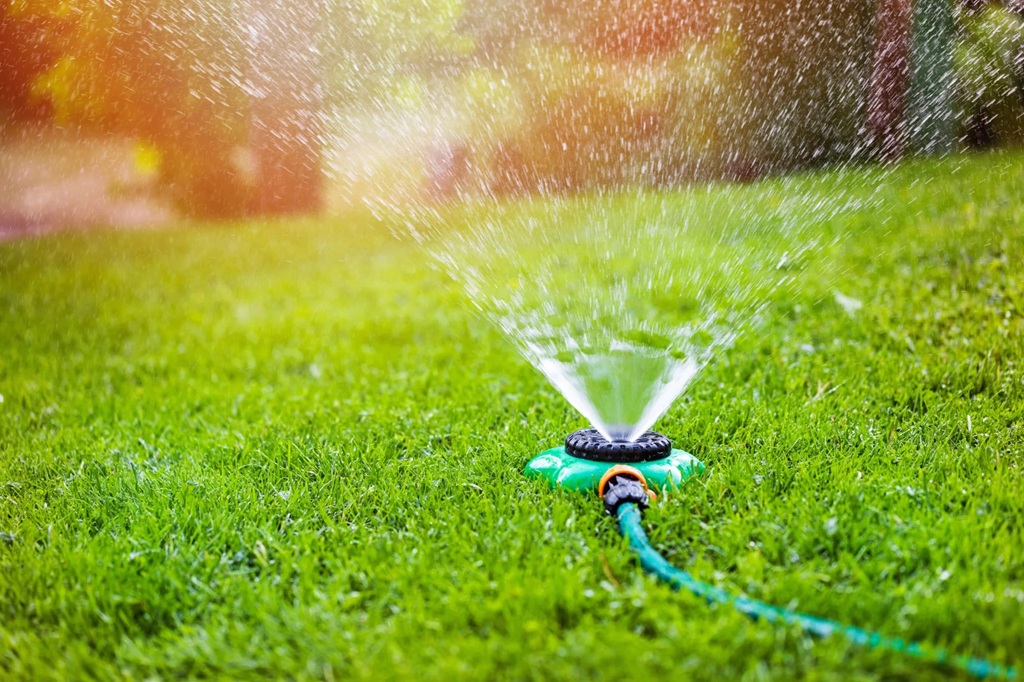
Even with the best intentions, homeowners can fall into common watering traps that can harm their lawns. Being aware of these mistakes is the first step to avoiding them.
The “Too Much, Too Often” Syndrome:
One of the most prevalent mistakes is overwatering, either by watering too frequently or applying too much water at once. This can lead to waterlogged soil, depriving roots of oxygen, promoting fungal diseases, and encouraging shallow root growth. Symptoms of overwatering include a constantly squishy or spongy feel to the lawn, excessive thatch buildup, fungal growth like mushrooms, and even yellowing grass (as roots struggle to absorb nutrients).
Shallow Watering Deception:
Light, frequent sprinklings that only wet the top inch or so of soil are detrimental. This encourages grass roots to stay near the surface, making the lawn highly susceptible to drought stress and heat damage. Always aim for deep, infrequent watering to promote a robust and resilient root system.
Ignoring Your Sprinkler System:
A poorly maintained or improperly adjusted sprinkler system can be a major source of watering woes. Leaky heads, clogged nozzles, or misaligned sprinklers can lead to uneven watering – some areas getting flooded while others remain dry. Regularly inspect your irrigation system, ensuring heads are functioning correctly, providing head-to-head coverage, and not spraying onto sidewalks or driveways. Also, consider investing in a smart sprinkler controller that adjusts watering schedules based on weather forecasts and local conditions.
Watering at the Wrong Time of Day (Revisited):
While we’ve emphasized early morning, watering in the scorching midday sun is highly inefficient due to rapid evaporation. Evening watering, as discussed, is a recipe for fungal problems. If morning isn’t feasible, a very late afternoon session (ensuring the grass dries before nightfall) is a lesser evil than nighttime watering, but still suboptimal.
Related: Lawn Care Tips for California: A Thriving Garden
Listen to Your Lawn: Signs It’s Thirsty (or Drowning!)
Your lawn will often give you visual cues when it’s in need of water or, conversely, when it’s had too much. Learning to read these signs can help you fine-tune your watering practices.
Indicators of an Under-Watered Lawn:
- Color Change: The grass may take on a bluish-gray or dull green tint.
- Footprints Linger: Walk across your lawn. If your footprints remain visible for an extended period, the grass blades lack the moisture to spring back. This is a classic sign of thirst.
- Wilting or Curling Blades: Individual grass blades may start to wilt, curl, or fold in half lengthwise to conserve moisture.
- Dry, Hard Soil: If the soil is visibly dry and hard to the touch, or if a screwdriver is difficult to push into the ground, it’s time to water.
Indicators of an Over-Watered Lawn:
- Spongy or Squishy Ground: The lawn feels soft and waterlogged underfoot long after watering.
- Runoff or Puddling: Water is pooling on the surface or running off into gutters because the soil is saturated.
- Increased Weed Growth: Certain weeds, like crabgrass and nutsedge, thrive in overly moist conditions.
- Fungal Growth: The appearance of mushrooms, or diseases like brown patch or dollar spot, often signals excessive moisture.
- Yellowing Grass: While also a sign of under-watering or nutrient deficiency, overwatering can suffocate roots, leading to yellowing.
- Algae or Moss: The presence of algae or an increase in moss can indicate chronically wet conditions.
By observing these signs and combining them with the principles of proper timing, quantity, and consideration for your soil and season, you can master the art of lawn watering.
Related: How Mycorrhizal Fungi Improve Lawn Growth Naturally
People Also Ask (FAQs)
Q1: Is it okay to water your lawn every day?
A: Generally, no. Watering your lawn every day typically leads to shallow root growth and can make your lawn more susceptible to disease and stress. It’s better to water deeply and less frequently, usually 1-3 times per week depending on your soil type, grass type, and weather conditions.
Q2: Should I water my lawn after mowing?
A: It’s perfectly fine to water your lawn after mowing. In fact, it can help the grass recover. However, avoid watering before mowing, as wet grass is harder to cut cleanly and can clog your mower.
Q3: How long should I water my lawn in hot weather?
A: In hot weather, your lawn will need more water. Stick to the 1-1.5 inches per week guideline, but you may need to apply it in two or three sessions rather than one to ensure it soaks in and to accommodate for increased evaporation. Check the soil moisture – if the top 6-8 inches are dry, it’s time to water. The duration will still depend on your sprinkler’s output (use the tuna can test).
Q4: Can you overwater grass?
A: Absolutely. Overwatering can be just as detrimental as under-watering. It can lead to oxygen-deprived roots, fungal diseases, shallow root systems, nutrient leaching, and a spongy lawn. Always aim for the right balance.
Q5: What time is too late to water the lawn?
A: Avoid watering in the late evening or at night. If the grass blades remain wet for extended periods overnight (more than 8-10 hours), it creates an ideal environment for fungal diseases to develop. If you can’t water in the early morning, the very late afternoon (e.g., 4-6 p.m.) is a less ideal alternative, but only if there’s enough daylight and airflow for the grass to dry before nightfall.
Q6: Does new grass seed need to be watered daily?
A: Yes, newly seeded lawns have different watering needs. The top inch or two of soil needs to be kept consistently moist, but not soggy, until the seeds germinate and the new grass begins to establish. This often means light, frequent watering, possibly once or twice a day, especially in warm or windy weather. Once the grass is established (about 3 inches high), you can gradually transition to a deeper, less frequent watering schedule.
Related: Step-by-Step Seasonal Lawn Care Guide | Year-Round Lawn Maintenance Tips
Conclusion: Nurturing a Thriving Lawn Through Smart Hydration
Achieving that enviable, lush green lawn is a journey that hinges significantly on mastering the art of watering. While it might seem like a mundane chore, understanding when, how much, and how often to water, tailored to your specific lawn’s needs, is paramount. The golden rule remains: early morning is the champion of watering times, offering unparalleled efficiency and promoting a healthier turf by minimizing water loss and disease risk.
Beyond just the clock, remember the importance of deep, infrequent watering to encourage robust root systems, the crucial role your soil type plays in water absorption and retention, and the need to adapt your practices to the changing seasons. By avoiding common pitfalls like daily shallow sprinkling or consistently overwatering, and by learning to read the subtle cues your lawn provides, you transform from a mere caretaker to a savvy lawn steward.
Ultimately, a thoughtful approach to hydration, combined with other good lawn care practices like proper mowing and occasional fertilization, will reward you with a vibrant, resilient, and beautiful green space that not only enhances your home’s curb appeal but also provides a welcoming oasis for relaxation and enjoyment. So, set that early alarm, give your lawn the drink it truly deserves, and watch it flourish.